
The 2017 Dodge Journey offers a comprehensive owner’s manual, spanning 176 pages, providing essential guidance for vehicle operation and maintenance procedures.

Overview of the Vehicle
The 2017 Dodge Journey is a versatile mid-size crossover, designed for families seeking both space and functionality. Owners will find detailed information within the provided manual, covering all aspects of the vehicle’s operation. This includes comprehensive sections on understanding vehicle identification numbers (VINs), and the intricacies of key components and systems.
The manual serves as a crucial resource for maximizing the Journey’s features, from its adaptable seating arrangements to its infotainment capabilities. It details procedures for routine maintenance, ensuring longevity and optimal performance. Furthermore, the 2017 Journey’s safety features, including airbag systems and seatbelt usage, are thoroughly explained, prioritizing passenger well-being. The manual’s 176 pages offer a complete guide for a confident ownership experience.
Importance of the Owner’s Manual
The 2017 Dodge Journey owner’s manual is an indispensable resource, offering 176 pages of critical information for safe and efficient vehicle operation. It’s not merely a guide, but a key to understanding your vehicle’s features, maintenance requirements, and safety systems. Ignoring the manual can lead to improper use, potentially causing damage or compromising safety.
This manual details everything from basic operation – starting, stopping, and driving – to more complex procedures like fluid checks and troubleshooting. It provides insights into the vehicle’s systems, ensuring owners can address minor issues or understand when professional service is needed. Familiarizing yourself with the manual unlocks the full potential of your Journey, promoting a long-lasting and enjoyable ownership experience, and preventing costly repairs.

Understanding Your Vehicle
Locating your 2017 Dodge Journey’s Vehicle Identification Number (VIN) and understanding its key components are crucial for service and identification purposes.
Vehicle Identification Number (VIN) Location
The Vehicle Identification Number (VIN) is a unique 17-character code assigned to your 2017 Dodge Journey, acting as its fingerprint. It’s essential for tracking the vehicle’s history, warranty claims, and potential recalls. Locating the VIN is straightforward; it’s typically found in several places on and within your vehicle.
You can find the VIN on a label affixed to the driver’s side dashboard, visible through the windshield. Additionally, it’s located on the driver’s side doorjamb sticker. The VIN is also imprinted on the vehicle’s title and registration documents. For comprehensive vehicle information and service records, referencing the VIN is paramount. Knowing its location ensures easy access when needed for maintenance, insurance, or legal purposes.
Key Components and Systems
Your 2017 Dodge Journey boasts a range of sophisticated components and systems designed for performance, safety, and comfort. Understanding these key areas is crucial for proper operation and maintenance. The engine, available in various configurations, powers the vehicle, while the transmission efficiently delivers that power to the wheels.
The braking system, including anti-lock brakes (ABS), ensures reliable stopping power. The suspension system provides a comfortable ride, and the steering system allows for precise control. The electrical system powers all electronic components, including the infotainment system and safety features. Familiarizing yourself with these core systems, as detailed in the owner’s manual, will enhance your driving experience and help you address any potential issues effectively.

Operating Your Vehicle
The 2017 Dodge Journey’s owner’s manual details essential procedures for starting, stopping, driving, fueling, and performing routine fluid level checks for optimal performance.
Starting and Stopping the Engine
The 2017 Dodge Journey owner’s manual provides detailed instructions for safely starting and stopping the engine. It outlines the proper procedures, including ensuring the vehicle is in Park or Neutral, depressing the brake pedal firmly, and turning the ignition key to the start position.
The manual also covers specific considerations for cold weather starting, emphasizing the importance of allowing the engine to warm up before driving. Regarding stopping the engine, it stresses the need to shift into Park, apply the parking brake, and turn the ignition key to the off position.
Furthermore, the guide details what to expect during the starting and stopping processes, including normal sounds and indicator light behavior. It also includes cautionary notes regarding potential hazards and safety precautions to prevent accidental vehicle movement or injury.
Driving Modes and Features
The 2017 Dodge Journey owner’s manual thoroughly explains the vehicle’s various driving modes and features, enhancing the driving experience. It details functionalities like the available all-wheel-drive system, outlining when and how to engage it for optimal traction in diverse road conditions.
The manual also provides comprehensive guidance on utilizing features such as cruise control, allowing drivers to maintain a consistent speed on highways. It explains the operation of the infotainment system, including navigation, audio controls, and connectivity options;
Furthermore, the guide details the use of driver-assist technologies, if equipped, such as parking sensors and blind-spot monitoring, emphasizing their limitations and proper usage. It ensures drivers understand how to maximize the Journey’s capabilities for a safe and enjoyable ride.
Fueling and Fluid Checks
The 2017 Dodge Journey owner’s manual provides detailed instructions on proper fueling procedures, specifying the recommended fuel grade for optimal engine performance and efficiency. It emphasizes safety precautions to take while refueling, minimizing risks.
Crucially, the manual outlines a comprehensive guide to checking essential fluid levels, including engine oil, coolant, brake fluid, power steering fluid, and windshield washer fluid. It details the location of each reservoir and provides clear instructions on how to accurately assess fluid levels.
The guide also explains the importance of regular fluid top-offs and the potential consequences of neglecting these checks, ensuring the vehicle’s longevity and preventing costly repairs. It’s a vital resource for maintaining the Journey’s mechanical health.

Maintenance Schedule
The 2017 Dodge Journey’s manual details routine maintenance tasks and recommended service intervals, covering all engines and transmissions within 5630 pages.

Routine Maintenance Tasks
The 2017 Dodge Journey owner’s manual emphasizes the importance of consistent routine maintenance for optimal vehicle performance and longevity. Key tasks include regular oil and filter changes, crucial for engine health, and tire rotations to ensure even wear and extend tire life.
Fluid level checks – encompassing coolant, brake fluid, power steering fluid, and windshield washer fluid – are vital for preventing system failures. Inspecting belts and hoses for cracks or wear is also essential, as is checking the condition of the battery and its connections.
Furthermore, the manual likely details air filter replacement, cabin air filter replacement, and spark plug inspection/replacement as part of the scheduled maintenance. Adhering to these tasks, as outlined in the extensive 5630-page service manual, will contribute significantly to a safe and reliable driving experience.
Recommended Service Intervals
The 2017 Dodge Journey’s service manual, a substantial document of approximately 250MB and 5630 pages, details specific service intervals for various components. Oil changes are typically recommended every 7,500 to 10,000 miles, depending on driving conditions and oil type. Tire rotations should occur every 5,000 to 8,000 miles to promote even wear.
Fluid flushes – including coolant, transmission fluid, and brake fluid – are generally advised at 60,000-mile intervals, though this can vary. Spark plug replacement is often scheduled around 100,000 miles. The manual also outlines inspection intervals for belts, hoses, and the exhaust system.
Following these recommended intervals, as meticulously documented in the factory service manual, ensures the vehicle remains in peak operating condition and helps prevent costly repairs down the road, maximizing its lifespan and reliability.
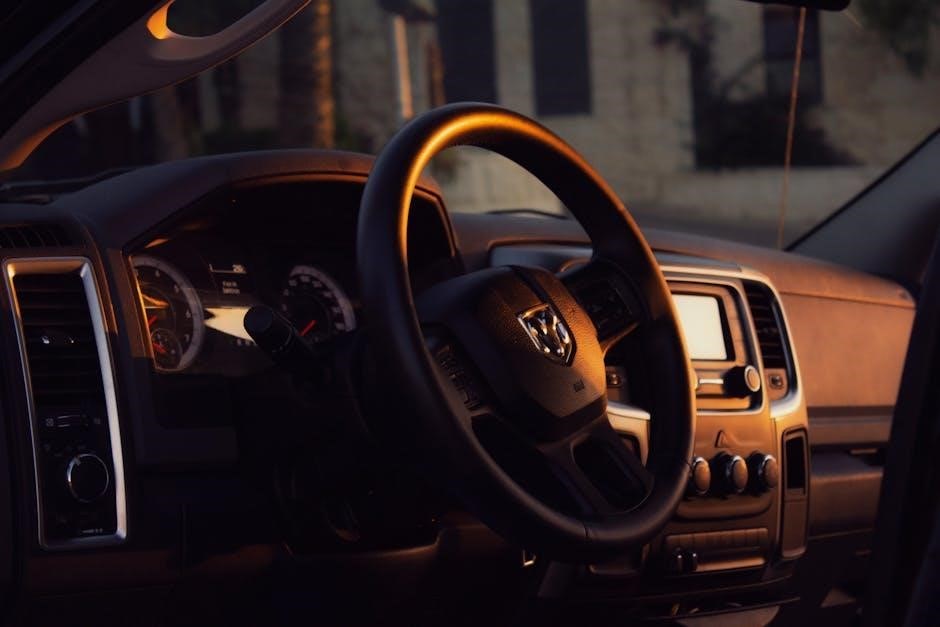
Interior Features
The 2017 Dodge Journey’s owner’s manual thoroughly explains seating adjustments and the infotainment system’s functionalities, enhancing the driving and passenger experience.
Seating and Adjustments
The 2017 Dodge Journey owner’s manual dedicates a section to comprehensively detailing all seating and adjustment features within the vehicle. This includes instructions for manually adjusting the front seats for optimal comfort and support, covering both fore/aft positioning, seat height, and backrest angle.
Furthermore, the manual explains how to properly utilize and adjust the headrests to ensure correct neck support for all occupants, contributing to passenger safety. Detailed guidance is provided on accessing and utilizing any power-adjustable seat features, if equipped. The manual also covers the operation of any available lumbar support systems, allowing drivers to customize their seating experience for extended journeys.
Finally, the manual outlines the proper use of child safety seats, including instructions for securing them correctly within the vehicle’s seating positions, adhering to all relevant safety regulations and guidelines.
Infotainment System Guide
The 2017 Dodge Journey’s owner’s manual provides a detailed guide to navigating and utilizing the vehicle’s infotainment system. It explains the functionality of the touchscreen display, including accessing various menus, adjusting settings, and controlling audio features. The manual outlines how to pair mobile devices via Bluetooth for hands-free calling and audio streaming, enhancing connectivity while driving.

Instructions are included for operating the radio, CD player (if equipped), and any available satellite radio services. The manual also details how to utilize the navigation system, including inputting destinations, viewing maps, and receiving turn-by-turn directions.
Furthermore, it explains the use of USB ports for connecting external devices and charging mobile phones. Troubleshooting tips are provided for common infotainment system issues, ensuring a seamless user experience.

Safety Features
The 2017 Dodge Journey’s manual details the airbag system and proper seatbelt usage, crucial for occupant protection during a collision or sudden stop.
Airbag System Information
The 2017 Dodge Journey is equipped with an advanced airbag system designed to provide supplemental protection in the event of a collision; The owner’s manual provides detailed information regarding the location of all airbags within the vehicle, including front, side, and curtain airbags.
It’s crucial to understand that airbags are designed to work with seatbelts, not as a replacement for them. The manual emphasizes the importance of always wearing seatbelts properly. It also outlines specific warnings and precautions regarding the airbag system, such as the risks associated with placing rear-facing child seats in front of active airbags.
Furthermore, the manual explains the conditions under which airbags will deploy, noting that deployment isn’t guaranteed in all collision scenarios. Proper maintenance of the airbag system is also addressed, advising owners to never attempt to repair or modify the system themselves and to seek qualified service for any related concerns.
Safety Restraints – Seatbelts
The 2017 Dodge Journey owner’s manual dedicates significant attention to safety restraints, specifically seatbelts. It unequivocally states that seatbelts are the primary safety device in a vehicle and must be worn by all occupants at all times during operation. Detailed instructions are provided on the proper use of seatbelts, including how to adjust them for a secure and comfortable fit.
The manual also addresses seatbelt usage for children, outlining requirements for child restraint systems and emphasizing the importance of following all applicable laws and regulations. Information is included regarding the location of LATCH (Lower Anchors and Tethers for Children) anchors within the vehicle;
Furthermore, the manual details the proper inspection and maintenance of seatbelts, advising owners to check for any signs of damage or wear and to replace damaged components immediately. It stresses that a properly functioning seatbelt is critical for maximizing safety in the event of a collision.

Troubleshooting and Emergency Procedures
The 2017 Dodge Journey manual offers guidance on jump starting and basic troubleshooting, assisting owners during unexpected vehicle issues and emergencies.
Jump Starting Procedures
When facing a discharged battery in your 2017 Dodge Journey, a jump start can get you moving again. First, ensure both vehicles are turned off. Connect the positive (+) cable to the positive terminal of the discharged battery, then to the positive terminal of the good battery. Next, connect the negative (-) cable to the negative terminal of the good battery, and finally, to a grounded metal surface on the disabled Journey – not the negative terminal of the discharged battery.
Start the vehicle with the good battery and let it run for a few minutes. Then, attempt to start the Journey. If it doesn’t start immediately, allow the charging vehicle to run longer. Once started, carefully disconnect the cables in the reverse order of connection. It’s crucial to consult the owner’s manual for specific instructions and safety precautions related to jump starting your 2017 Dodge Journey.
Basic Troubleshooting Guide
The 2017 Dodge Journey owner’s manual provides a basic troubleshooting section to address common issues. For example, if your vehicle won’t start, check the battery connections, fuel level, and ignition switch. If experiencing electrical problems, inspect fuses – the manual details fuse box locations and diagrams. Unusual noises could indicate mechanical issues, requiring professional diagnosis.
Regarding the infotainment system, a reset might resolve minor glitches. Tire pressure monitoring system (TPMS) alerts should prompt a tire pressure check. Remember, this guide offers preliminary steps; complex problems necessitate a qualified mechanic. The extensive 5630-page service manual (available as a 250mb PDF) offers detailed diagnostics, covering all engines and transmissions, for more in-depth troubleshooting.